
Small Mercies: Sifting through Kerouac's Western Haiku
And a note from Tom Petty

Ever since writing about Nick Virgilio last week, I’ve been plotting a day trip to Camden. There’s a draft of a poem about him in the chat; I’d be interested in your feedback.
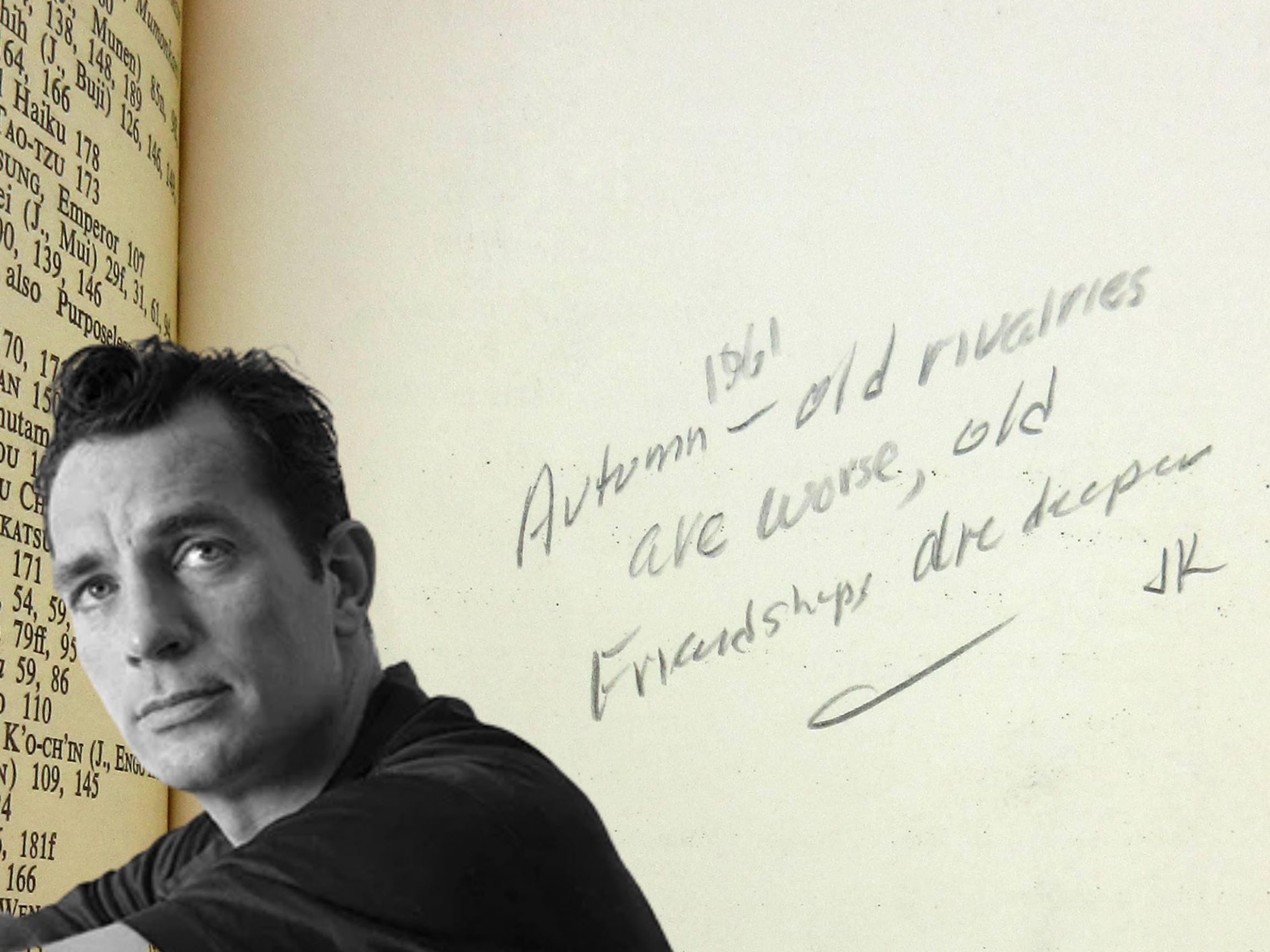
Virgilio is primarily known for popularizing haiku in the US, but he was far from the only luminary to do so. Jack Kerouac also engaged the form deeply and teased out something of a definition. Kerouac was convinced that Western haiku ought not focus on strict syllable counts. What mattered, he said, was three or four honest lines:
“The American Haiku is not exactly the Japanese Haiku. The Japanese Haiku is strictly disciplined to seventeen syllables but since the language structure is different I don’t think American Haikus (short three-line poems intended to be completely packed with Void of Whole) should worry about syllables because American speech is something again…bursting to pop. Above all, a Haiku must be very simple and free of all poetic trickery and make a little picture and yet be as airy and graceful as a Vivaldi Pastorella.”
Wresting oneself free from poetic trickery, especially in three or four lines, is, if you’ll excuse me, no small feat. Short forms often resolve to cleverness, which often results in so what.
Short poems, if short only for the sake of their form, often seem that much more rushed. The pithy closure’s unearned and the irony yawns. I’m not sure how often tidy is true, but you see it a lot.
Good poetry (good writing, period) resists this. If the goal is to pull something eternal from something specific, I’m not sure I need to know all of the sly look what I did here. But short poems are hard, and we cross our fingers about being too slick. We forget that wry isn’t always profound1.
I think this all has something to do with another area of drift: Japanese haiku focus on nature. Western haiku is often more self-conscious, individualized, and, I suppose, industrial. Sometimes it’s reduction of complex interactions (with other lonely humans and not, say, a pond) into one distilled point no one besides the writer can access. Not every successful haiku needs to be about silver bellies of maple leaves right before a storm, but don’t drop me halfway into the fight with your spouse via nothing but personal ciphers. I’ll need more than your inscrutable symbols.
Kerouac has thoughts on the problem:
I went in the woods
to meditate -
It was too cold
Why? Because the isolate I is, from the first, already too cold.
Perfect moonlit night
marred
by family squabbles.
Here, there’s no I, and you might even miss the missing i in marred/married. The marriage, unnamed, frames the system. It’s a good trick pushing the thing past reportage. The more I sit with it, the more I like it. That’s Watts’ “an open door that looks shut” doing its work. Still, I wouldn’t pay $8.95 for a paperback full of this.
Useless, useless,
the heavy rain
Driving into the sea.
We’ve all read Qoheleth, or should do.
The little worm
lowers itself from the roof
By a self shat thread
Self shat is funny. It might even make us wonder how much of our own lowering is selfsame self shat. I also learned, yesterday, that shit shares the same root as schism.
Here’s “Death of Salesman” in three lines:
Crossing the football field
coming home from work –
the lonely businessman.
One for the start of Spring Training, when it’s sunny in Clearwater or Tucson, but for much of the country, good weather’s six weeks away:
Empty baseball field
a robin
hops along the bench
Because Kerouac keeps outdoor settings at the heart of these pieces, the social markers he paints with land clearly.
I wrote this over the last few days, thinking about my upcoming birthday:
Today, 46
calf machine maxed
The snow-mottled trail opens up.
I think it’s much better than the first version:
Today, 46
legs strong as f—
Just enough gray in the beard.
To me, turning a graying beard into a snowy trail (which is also, still, a graying beard) does to the poem what the thaw does to the trail. Things aren’t perfect, but they open up. I’m no longer asking you to play along about the parts of our aging bodies we like. That said, I go back and forth on the second line.
Lastly, a great couplet from Tom Petty and the Wilburys I just happened to hear while writing:
She wrote a long letter
on a short piece of paper.
Talk soon.
We all do this.